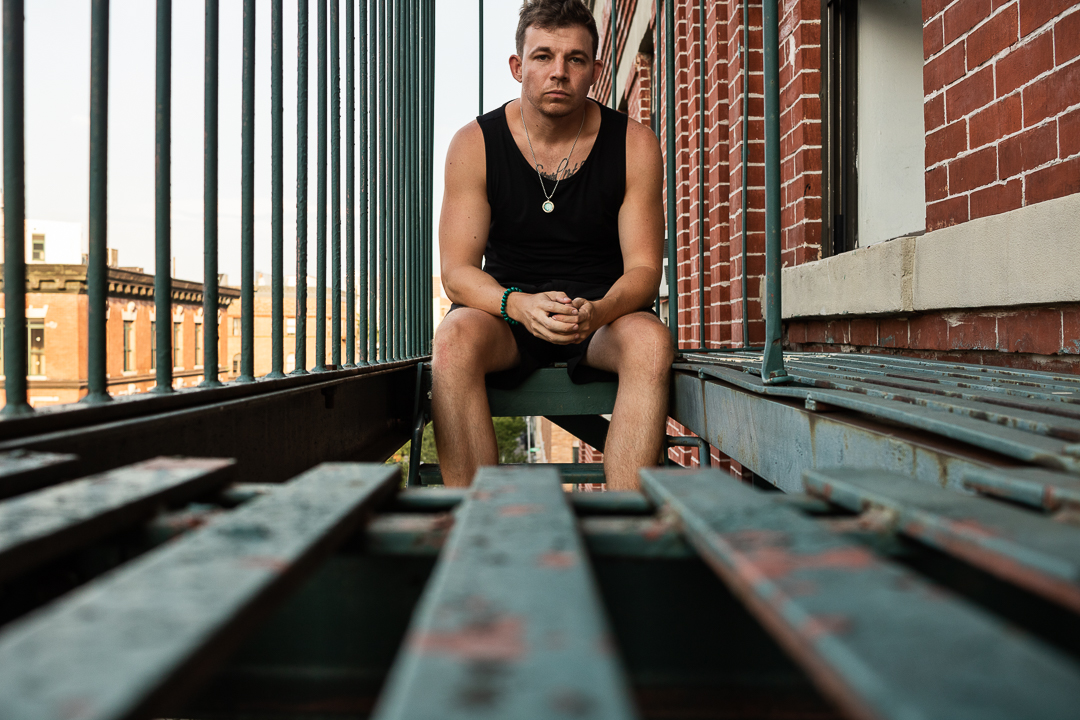
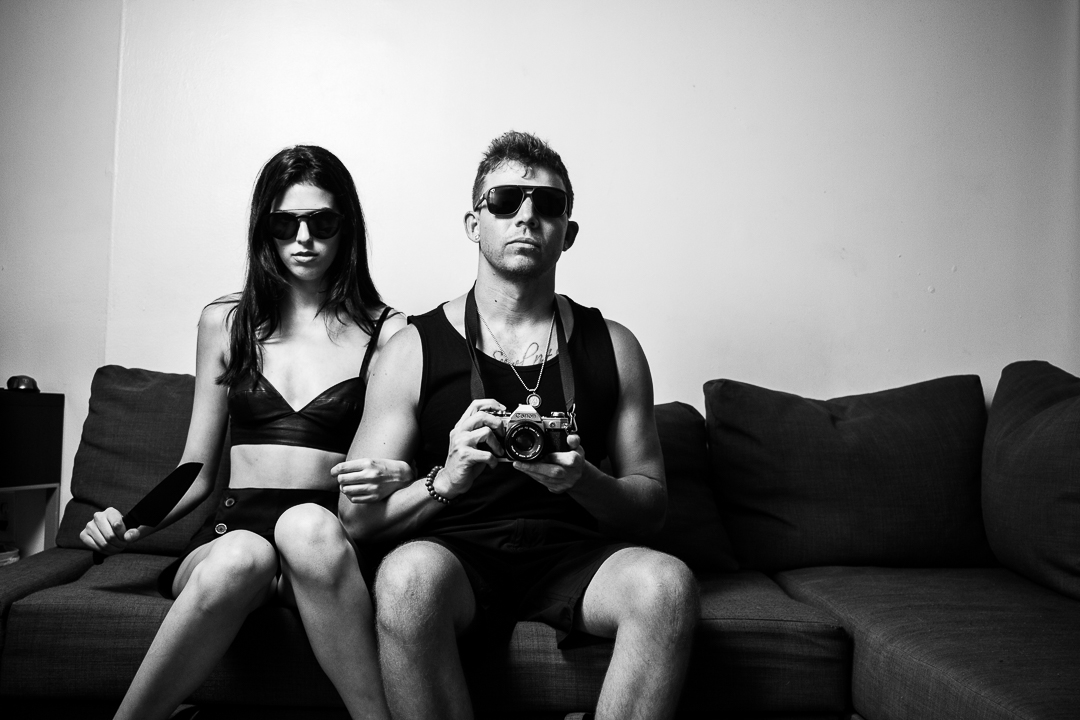
Andy Welch is a photographer and filmmaker whose work exists at the intersection of mythology, theology, and contemporary imagery. Based on the east coast, Welch has collaborated with top modeling agencies and clients worldwide, including shooting cover art for Mickie James' single "Great Minds." His visual vocabulary draws more from classical painting than modern photography—the dramatic chiaroscuro of religious works, the violent beauty of biblical narratives translated through a contemporary lens.
Welch's path to photography began on the other side of the camera. As a model, he spent a year traveling the country booking jobs with minimal resources, learning the mechanics of being photographed before ever holding a camera himself. This foundation—understanding the psychology of the subject—fundamentally shaped his approach to image-making. When he transitioned behind the lens, he brought an uncommon empathy for what exists in the frame.
Welch's connection to water and maritime themes traces back to the Outer Banks, where he grew up. The barrier islands—known as the Graveyard of the Atlantic—are fragile strips of land the ocean perpetually threatens to reclaim. Hundreds of ships and their sailors were lost along that coast, and Welch grew up surrounded by that history. The ghosts of those wrecks linger in the landscape, their haunting beauty most visible when storms roll through. It's a place that shaped his understanding of impermanence and the tension between beauty and destruction.
"Virtual Angels" emerged in 2020 when the world shut down. With travel impossible and in-person shoots suspended, Welch adapted by directing photography sessions entirely over FaceTime. The series documents both the constraints of the moment and the work that came from it—models collaborating remotely from their homes during lockdown, creating images through screens. It was about learning to adapt when the entire world was in chaos.
"Angels of Atlantis" originated in Miami in 2021 as a found footage narrative: Welch appearing in an afterlife where the submerged city and its guardian angels still exist. Miami represented a period of spiritual and physical transformation—failures confronted, discipline forged through training in oppressive heat, and an undeniable energy Welch attributes to the city's proximity to the Bermuda Triangle. The work captures both beauty and unease, particularly in the atmospheric tension of approaching storms.
"The Void" emerged from Manhattan's particular brand of isolation. Strip away the vertical architecture and the island reveals its vulnerability—a small landmass the ocean perpetually threatens to reclaim. The series examines urban disconnection: millions of people existing in close physical proximity yet remaining fundamentally separate. This paradox of density and loneliness became the conceptual foundation.
Welch's evolution into filmmaking was less a departure than an expansion. Still photography, regardless of technical mastery, has limitations when narrative demands duration. His current work extends the mythological and atmospheric concepts he established in stills, using motion, sound design, and temporal pacing to create immersive visual experiences. The medium changed; the obsessions remain constant.
When not creating visual work, Welch maintains the same physical discipline that shaped his early years as a model. Surfing, bodybuilding, and mountain biking aren't separate from his art—they're extensions of the same commitment to pushing limits and understanding what the body can endure. The camera work benefits from someone who knows what it means to be physically present in a moment.
If you would like to book Andy for a shoot or interview him, you can head to the Contact page to do so.